
YEG Exotic Plant Crowd
Thanksgiving Cactus (Schlumbergera Truncata) #01
Description
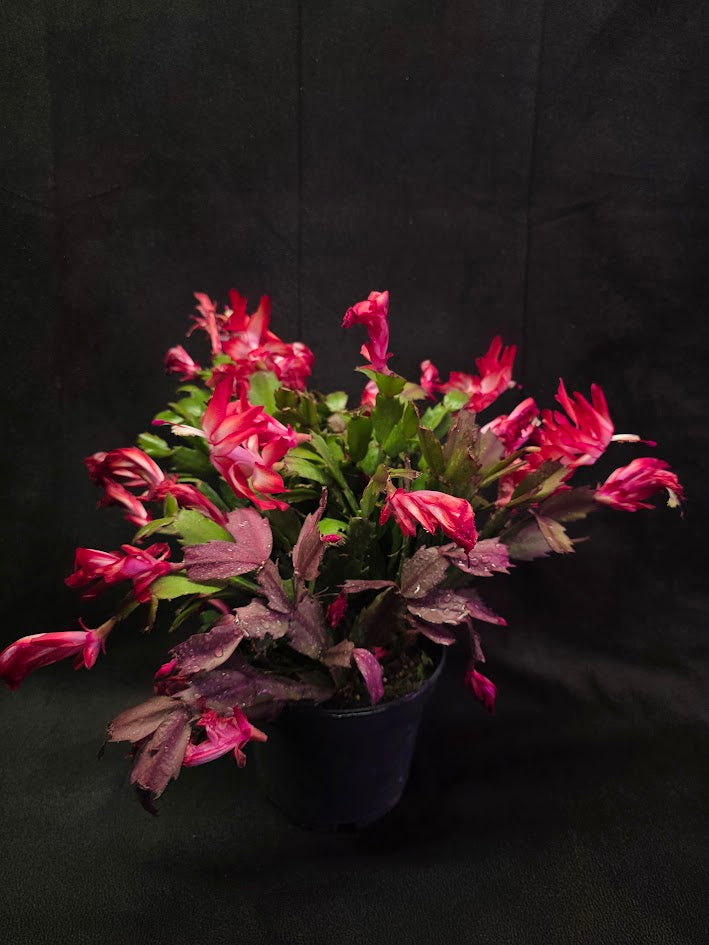
Schlumbergera truncata, commonly known as the Thanksgiving Cactus, Crab Cactus, or False Christmas Cactus, is a spectacular tropical flowering cactus highly prized for its vibrant seasonal blooms, distinctive segmented foliage, and gracefully cascading growth habit. Native to the coastal mountainous rainforests of southeastern Brazil, this remarkable member of the Cactaceae family naturally grows as an epiphyte on tree branches and occasionally on rocky surfaces. Unlike traditional desert cacti, the Thanksgiving Cactus has adapted to humid tropical environments with filtered sunlight and relatively consistent moisture availability. Its exceptional flowering display and approachable care requirements make it a particularly desirable addition to both beginner and experienced plant collections.
The foliage of Schlumbergera truncata consists of flattened, fleshy stem segments that display shades of bright green to deep emerald green. These specialized photosynthetic structures, known as cladodes, feature distinctive pointed, tooth-like projections along their margins. This characteristic gives the plant its alternative common name, Crab Cactus, and distinguishes it from the traditional Christmas Cactus, Schlumbergera × buckleyi, which generally possesses more rounded stem margins. Under favourable lighting conditions, the edges of the segments may occasionally develop subtle reddish or purplish pigmentation.
The most captivating characteristic of the Thanksgiving Cactus is its extraordinary flowering habit. Mature specimens produce beautiful, elongated, tubular flowers with intricately arranged, outward-curving petals that create an elegant, almost orchid-like appearance. Depending on the cultivar, flowers may display spectacular shades of pink, magenta, red, coral, orange, peach, yellow, lavender, or creamy white. The blooms emerge from the tips of mature stem segments, creating an impressive floral display that contrasts beautifully against the plant's lush green foliage.
Schlumbergera truncata typically flowers during the autumn and early winter months in the Northern Hemisphere, earning its common name from its tendency to bloom around the American Thanksgiving holiday in November. Flowering is naturally influenced by shorter daylight hours, longer uninterrupted nights, and cooler seasonal temperatures. Established specimens can produce numerous flowers simultaneously, with the overall floral display potentially lasting several weeks under favourable growing conditions. Some plants may also produce additional blooms later in the season.
The Thanksgiving Cactus exhibits a naturally branching and cascading growth habit, gradually developing numerous interconnected stem segments that arch gracefully over the edges of its container. Mature specimens can reach approximately 30–60 centimetres in width, with older plants occasionally developing considerably larger and more substantial displays. Its elegant trailing structure makes it particularly suitable for hanging baskets, elevated planters, decorative ceramic containers, and seasonal indoor arrangements. Established plants can live for several decades with appropriate care, making them exceptional long-term botanical companions.
Schlumbergera truncata thrives in bright, indirect sunlight or beneath suitably positioned full-spectrum LED grow lights. Adequate lighting encourages healthy stem development, compact branching, and successful flower production. Gentle direct morning sunlight may be beneficial following gradual acclimation, although prolonged exposure to intense afternoon sunlight should be avoided. Excessively strong lighting may cause reddish discolouration, bleaching, or scorching of the delicate stem segments, while insufficient lighting may contribute to reduced flowering and weaker growth.
Unlike traditional desert cacti, the Thanksgiving Cactus appreciates moderate humidity and more consistent moisture availability. Humidity levels of approximately 40–60% provide favourable conditions for indoor cultivation, although established specimens can generally adapt to average household humidity. Adequate air circulation remains essential for preventing fungal issues and excessive moisture accumulation. Prolonged exposure to extremely dry air, particularly near heating vents, may contribute to shrivelled stem segments and premature flower bud loss.
A loose, airy, organic-rich growing medium that retains appropriate moisture while providing excellent drainage is recommended to accommodate the plant's natural epiphytic growing tendencies. Suitable substrates may include combinations of high-quality cactus potting soil, fine orchid bark, coconut fibre, perlite, pumice, and other appropriate organic materials. Unlike many desert-dwelling cacti, Schlumbergera truncata benefits from a substrate containing a greater proportion of moisture-retentive organic components while maintaining sufficient oxygen circulation around its root system.
Water thoroughly when the upper portion of the growing medium has dried, allowing excess water to drain freely from the container. The Thanksgiving Cactus appreciates relatively consistent moisture during active growth and flowering but should never remain continuously saturated. Although its fleshy stem segments allow it to tolerate brief periods of reduced water availability, prolonged dehydration may result in wrinkled foliage, wilting, and premature flower bud drop. Watering frequency should be reduced slightly following flowering and during periods of slower growth.
Moderate temperatures of approximately 18–26°C provide favourable conditions for active growth. To encourage flower bud development, the plant benefits from cooler nighttime temperatures of approximately 13–18°C and around 12–14 hours of uninterrupted darkness each night for six to eight weeks during the autumn months. Artificial lighting during the evening may interfere with this natural flowering response. Once flower buds have developed, maintaining stable environmental conditions is particularly important, as sudden changes in temperature, lighting, or moisture availability may cause premature bud loss.
During periods of active vegetative growth, a diluted, balanced houseplant or cactus fertilizer may be applied every two to four weeks to support healthy root development, stem production, and future flowering. Fertilization should be reduced or temporarily discontinued during flower induction and periods of slower growth. Excessive nutrient applications should be avoided, as accumulated mineral salts can damage the plant's relatively delicate root system.
Schlumbergera truncata can be readily propagated through healthy stem cuttings consisting of two to four connected segments. Cuttings should be carefully separated at their natural joints and allowed to dry briefly before being placed into an appropriately airy, lightly moist propagation medium. Maintaining stable warmth, bright indirect lighting, and moderate moisture can encourage successful root establishment. Planting multiple rooted cuttings together can help create a fuller and more substantial flowering specimen. Light pruning following flowering may also encourage additional branching, potentially increasing the number of flowering tips in subsequent seasons.
The Thanksgiving Cactus generally appreciates being cultivated in a moderately snug container and does not require frequent repotting. Repotting every two to three years, or when the growing medium has deteriorated, is usually sufficient. Repotting is best performed following the flowering season or during active vegetative growth, using a container only slightly larger than the existing root system. Oversized containers may retain excessive moisture and increase the risk of root rot.
Schlumbergera truncata is generally considered non-toxic to cats and dogs, making it an attractive option for households with pets. Unlike many traditional cacti, it does not possess sharp protective spines, allowing for easier handling and placement within indoor living spaces. However, excessive consumption of ornamental foliage should still be discouraged to prevent potential digestive discomfort and damage to the plant.
With its extraordinary seasonal flowers, distinctive toothed stem segments, graceful cascading growth habit, and relatively manageable care requirements, Schlumbergera truncata is an exceptional addition to any tropical plant or cactus collection. Its spectacular flowering display makes it particularly suitable for decorative hanging baskets, bright windowsills, festive arrangements, indoor greenhouse collections, and thoughtful seasonal gifts. Its lush appearance provides a beautiful contrast against traditional desert cacti, Rhipsalis, Epiphyllum, and other ornamental epiphytic plants. Combining the remarkable resilience of a cactus with the elegant floral beauty of a tropical rainforest plant, the Thanksgiving Cactus offers year-round ornamental interest and a rewarding growing experience that can be enjoyed for generations.
Please note that each living plant is unique and may vary slightly in size, shape, stem count, branching structure, colouration, and growth habit. Flower colour is dependent on the individual cultivar, while flowering frequency and duration are influenced by maturity, lighting, temperature, and overall growing conditions. Plants are not guaranteed to arrive in bloom. Existing flowers and developing buds may naturally decline during shipping and acclimation. Providing stable temperatures, bright indirect lighting, excellent drainage, and consistent moisture management will help encourage healthy new growth and future flowering following establishment.
Care & shipping
Bright indirect light, high humidity, water when the top inch of medium dries. Shipped with insulation and a heat pack in cold months.
How we pack
Root systems are wrapped damp, foliage is braced, and the box is insulated. Orders ship early in the week so nothing sits in transit over a weekend.
Also available