
YEG Exotic Plant Crowd
Euphorbia Enopla #01
Description
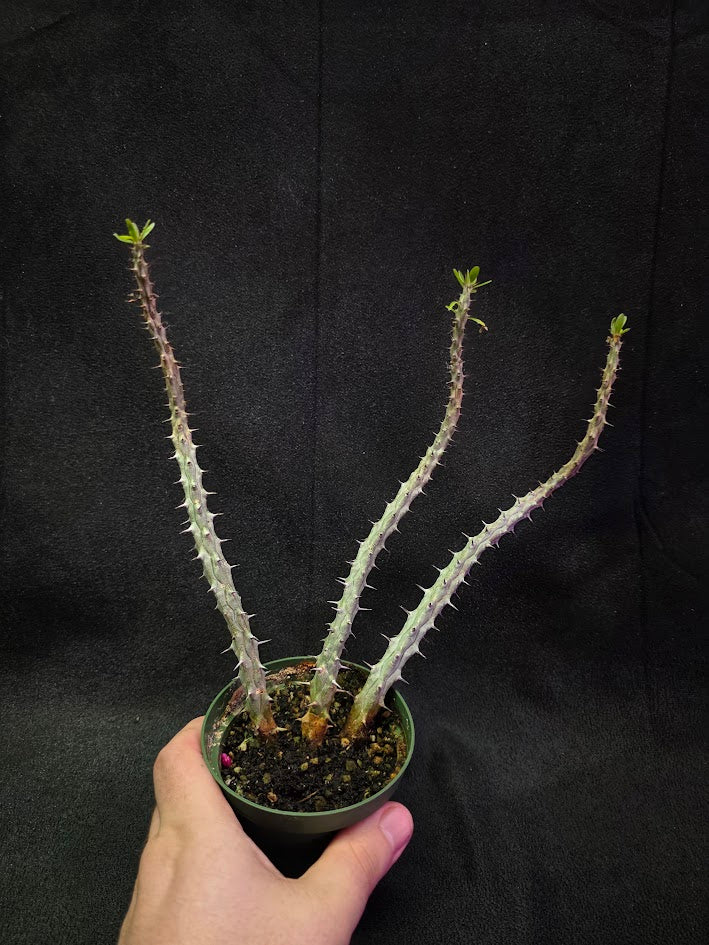
Euphorbia enopla, commonly known as the Pincushion Euphorbia, is an extraordinary succulent highly prized for its striking red spines, distinctive branching structure, and dramatic architectural appearance. Native to South Africa, this fascinating member of the Euphorbiaceae family naturally inhabits dry, rocky environments where it has adapted to periods of limited rainfall and intense sunlight. Its exceptional combination of vibrant pigmentation and sculptural growth makes it a particularly desirable specimen among collectors of uncommon succulents, desert plants, and ornamental Euphorbias.
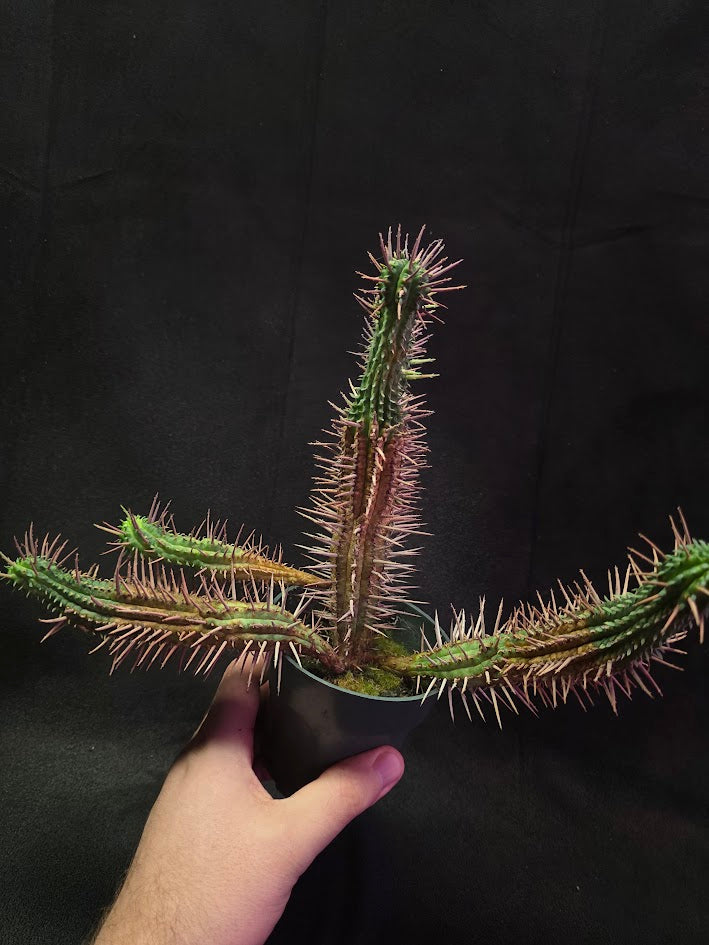
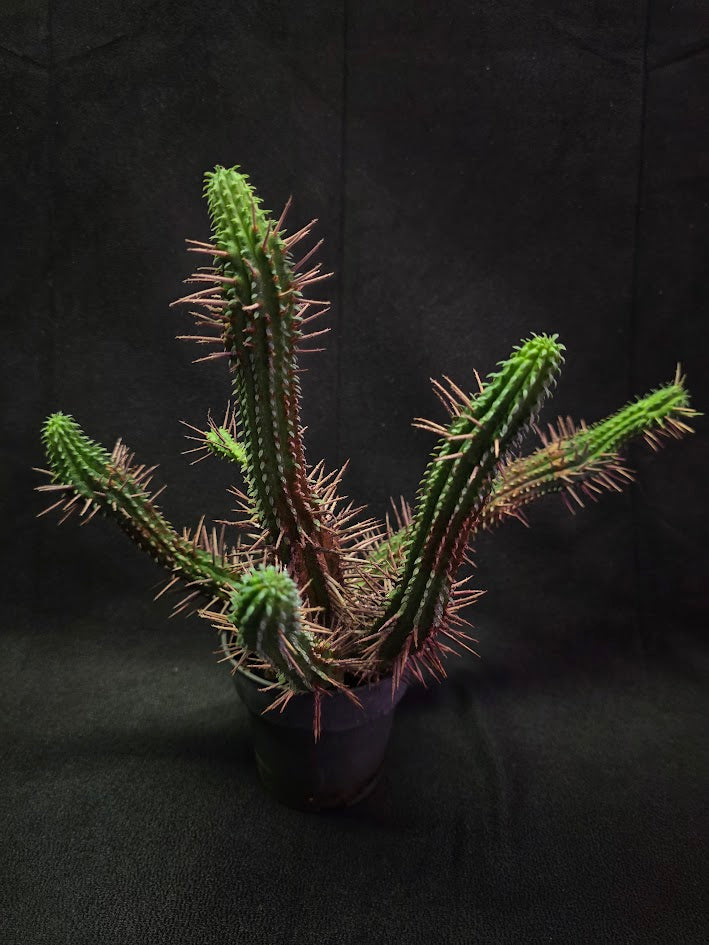
The most remarkable characteristic of Euphorbia enopla is its spectacular display of elongated, colourful spines contrasting beautifully against its green succulent stems. These distinctive spine-like structures are actually modified, persistent flower stalks that develop along the pronounced ribs of the plant. Newly formed spines frequently display vibrant shades of crimson, burgundy, pink, and reddish-purple, gradually transitioning toward grey or brown as they mature. Under favourable lighting conditions, the contrast between the fresh green stems and intensely coloured spines creates an exceptionally dramatic ornamental display.
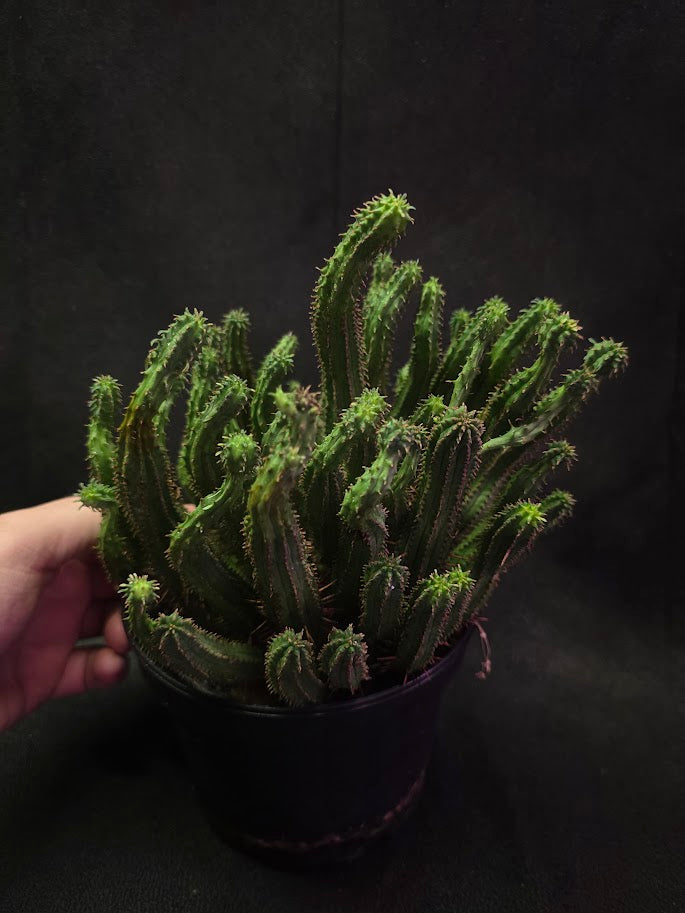
Euphorbia enopla develops thick, upright, cylindrical stems featuring prominent longitudinal ribs and regularly spaced spines. The stems typically display shades of bright green, deep emerald green, and occasionally bluish-green, depending on maturity and environmental conditions. Its intricate arrangement of colourful spines gives the plant a distinctive pincushion-like appearance. Although its morphology closely resembles that of certain cacti, Euphorbia enopla is botanically distinct from members of the Cactaceae family, representing a fascinating example of convergent evolution among drought-adapted plants.
As the plant matures, Euphorbia enopla develops numerous branches around its base, gradually forming an impressive, densely clustered, shrub-like specimen. Established plants can reach approximately 30–100 centimetres in height under favourable growing conditions, although container-grown specimens generally remain more compact. Its naturally branching growth habit creates an increasingly elaborate architectural display, making mature specimens particularly attractive as statement plants within specialized succulent collections.
Although primarily cultivated for its exceptional stems and colourful spines, mature Euphorbia enopla specimens may produce small, yellowish-green to reddish floral structures known as cyathia. These specialized reproductive structures are characteristic of the Euphorbia genus and provide additional botanical interest. Euphorbia enopla is dioecious, meaning individual plants produce either male or female flowers. Its principal ornamental appeal, however, remains its distinctive branching structure and spectacular spine colouration.
Euphorbia enopla thrives in bright light with several hours of direct sunlight or beneath suitably positioned full-spectrum LED grow lights. Adequate lighting is particularly important for encouraging compact, sturdy growth and enhancing the vibrant reddish pigmentation of newly developing spines. Plants cultivated under insufficient lighting may develop elongated, thinner stems and less pronounced colouration. Gradual acclimation is recommended when introducing the plant to stronger direct sunlight to prevent scorching.
Unlike tropical foliage plants that require elevated humidity, Euphorbia enopla prefers relatively dry growing conditions with excellent air circulation. Average to low household humidity is generally suitable, and supplemental humidity is unnecessary. Prolonged exposure to excessively humid, poorly ventilated environments should be avoided, as these conditions may contribute to fungal issues, stem deterioration, and root rot.
An exceptionally well-draining, porous, mineral-rich growing medium is essential for maintaining healthy root development. Suitable substrates may include high-quality cactus and succulent potting soil amended with generous quantities of pumice, perlite, coarse silica sand, lava rock, or fine gravel. A substrate containing approximately 60–80% mineral components provides a useful starting point for cultivation. Heavy, moisture-retentive growing mediums and containers without adequate drainage should be avoided.
Water thoroughly when the growing medium has dried completely, allowing excess water to drain freely from the container. Euphorbia enopla stores substantial moisture within its thick, succulent stems, allowing it to tolerate extended periods of reduced water availability. Prolonged overwatering is one of the most significant risks when cultivating this species. Watering frequency should be substantially reduced during the cooler winter months, particularly when lighting intensity and temperatures decrease. Avoid maintaining excessively moist substrate during periods of slower growth.
Moderate to warm temperatures of approximately 18–30°C provide favourable conditions for active growth. Although Euphorbia enopla can tolerate somewhat cooler temperatures when maintained in dry conditions, it should be protected from frost, freezing temperatures, and prolonged exposure to cold, damp environments. During the warmer months, the plant may be cultivated outdoors in a sheltered, sunny location following gradual acclimation. In colder Canadian climates, specimens should be brought indoors before nighttime temperatures become excessively low.
During periods of active growth, a diluted, low-nitrogen cactus and succulent fertilizer may be applied occasionally to support healthy root development and stem production. Euphorbia enopla does not require heavy fertilization, reflecting its natural adaptation to relatively nutrient-poor environments. Excessive fertilization may encourage weak, elongated growth or contribute to mineral accumulation around the root system. Fertilization should be reduced or discontinued during periods of seasonal inactivity.
Euphorbia enopla can be propagated through healthy stem cuttings or seeds. When propagating through cuttings, appropriate protective gloves and eye protection should be worn due to the plant's irritating milky latex. Cut surfaces should be allowed to dry and form a protective callus before being placed into a suitable, well-draining propagation medium. Maintaining stable warmth, bright indirect lighting, and careful moisture management can encourage successful root establishment.
Like other members of the Euphorbia genus, Euphorbia enopla produces a toxic, milky latex when its stems are damaged. This sap can cause significant skin irritation, serious eye injury, and adverse effects if ingested. Protective gloves and eye protection are recommended when handling, pruning, repotting, or propagating the plant. Its sharp spines also require careful handling. Euphorbia enopla should always be kept out of reach of pets and young children and is not intended for consumption or medicinal use.
With its extraordinary crimson spines, vibrant green stems, pronounced ribbing, and beautifully clustered growth habit, Euphorbia enopla is an exceptional statement plant for any specialized succulent collection. Its dramatic architectural appearance provides a spectacular contrast against Euphorbia obesa, Euphorbia horrida, Astrophytum, Ferocactus, and other ornamental desert plants. Particularly suitable for sunny windowsills, decorative ceramic planters, indoor grow-light setups, greenhouse collections, and carefully designed desert landscapes, this remarkable South African species combines rugged botanical beauty with striking natural colouration and relatively manageable care requirements.
Please note that each living plant is unique and may vary in size, shape, stem count, branching structure, spine length, colouration, and natural markings. The intensity of red, pink, and burgundy pigmentation is dependent on lighting intensity, maturity, seasonal changes, and overall growing conditions. Older spines naturally transition toward grey or brown as they mature. Juvenile specimens may not yet display the extensive branching and substantial proportions associated with mature plants. Flowering is not guaranteed at the time of purchase. Providing generous lighting, excellent drainage, stable temperatures, and careful moisture management will help encourage healthy new growth following shipping and acclimation.
Care & shipping
Bright indirect light, high humidity, water when the top inch of medium dries. Shipped with insulation and a heat pack in cold months.
How we pack
Root systems are wrapped damp, foliage is braced, and the box is insulated. Orders ship early in the week so nothing sits in transit over a weekend.
Also available