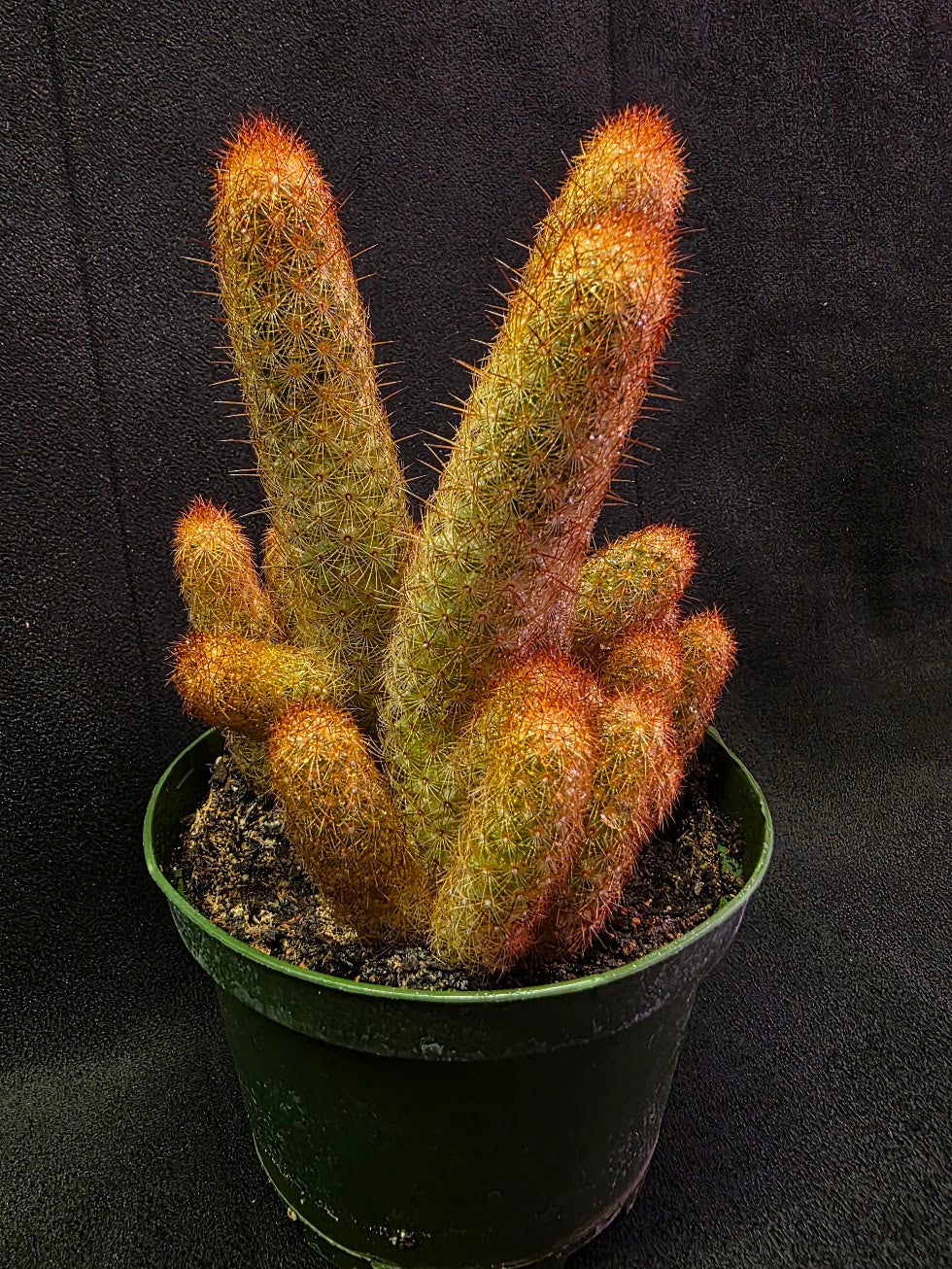




Oranges And Lemons Prickly Pear Cactus #01
Opuntia rhodantha 'Oranges and Lemons' Prickly Pear Cactus is a spectacular and truly unique cold-hardy cultivar that delivers one of the most mesmerizing color-changing flower displays ever seen in the cactus world. This remarkable selection showcases golden-yellow blooms that open bright and sunny on the first day, gracefully fade to a soft ginger-ale amber tone, and then deepen to stunning orange by the second day, creating an extraordinary bicolor effect where both lemon-yellow and vibrant orange flowers appear simultaneously on the same plant. The constantly shifting palette creates a dynamic living kaleidoscope that transforms daily, ensuring your garden never looks quite the same from one morning to the next. Whether you're a serious cold-climate cactus collector seeking named cultivars with exceptional ornamental value, designing water-wise landscapes that deliver sustained visual interest, or adding unique conversation-starting specimens to rock gardens and xeriscaping projects, Oranges and Lemons delivers unmatched color drama, compact manageable size, and supreme winter hardiness that allows it to thrive in challenging northern climates.
This low-growing selection forms neat, spreading mats that reach just 6 inches in height while extending horizontally to 36 inches wide, making it absolutely perfect for rock gardens, alpine gardens, container displays, green roofs, raised beds, and xeriscaping applications where space limitations demand compact plants with maximum visual impact. The plant features the characteristic flat, paddle-shaped green pads of the rhodantha species, creating dense clumps with excellent coverage and year-round architectural texture. Unlike sprawling varieties that can become invasive and difficult to manage, Oranges and Lemons maintains a moderate growth rate and stays appropriately proportioned, allowing you to enjoy authentic prickly pear character in intimate garden settings, foundation plantings, mixed succulent borders, or large-scale installations where you need reliable performance without aggressive spread. The compact size and tidy habit make this cultivar equally appropriate for small urban gardens, balcony containers, courtyard landscapes, or expansive native plant gardens.
The color-changing flower display is where Oranges and Lemons truly earns its reputation as a spectacular new variety. During the primary blooming period in June, the pads produce abundant 2-3 inch flowers that open fresh each morning in brilliant golden-yellow shades reminiscent of fresh lemon juice catching sunlight. As the day progresses and the flower matures, the petals undergo a fascinating transformation, gradually shifting to a soft ginger-ale or champagne tone that appears almost translucent and luminous. By the second day before the flower closes permanently, the blooms deepen dramatically to warm orange shades ranging from peachy-coral to sunset amber, creating a stunning gradient effect across the entire plant as flowers at different stages of maturity display their unique colors simultaneously. This remarkable bicolor look creates visual depth and complexity that no single-toned variety can match, transforming the cactus into a living work of art that attracts native pollinators including specialized bees, butterflies, and beneficial insects critical to healthy garden ecosystems.
The blooming period typically spans 2-3 weeks depending on spring temperatures and growing conditions, with new flowers opening daily to replace spent blooms and ensure extended enjoyment of the color-changing spectacle. Individual flowers remain open from approximately 8-12 hours during peak sunshine, closing at night and reopening the following morning with their transformed color palette. On well-established plants with abundant pad production, dozens or even hundreds of blooms may appear simultaneously during peak bloom season, creating an absolutely breathtaking display that stops visitors in their tracks and generates endless questions about how you achieved such incredible multicolor effects on a single plant. The secret, of course, is the natural anthocyanin pigment chemistry inherited from the rhodantha species that causes progressive color deepening as flowers age and environmental conditions shift.
One of the most valuable attributes of Oranges and Lemons is its exceptional cold hardiness to USDA Zone 5, allowing outdoor cultivation year-round in regions where winter temperatures can plunge to -20°F (-29°C) or even lower with adequate snow cover and proper siting. This remarkable winter tolerance makes Oranges and Lemons suitable for gardens throughout southern Alberta, southern Saskatchewan, British Columbia's interior valleys, Montana, Wyoming, Colorado, Utah, Idaho, Minnesota, Wisconsin, Michigan, and similar northern locations where most tropical and subtropical cacti cannot survive unprotected. The plant is a selection of Opuntia rhodantha, a species native to the Rocky Mountain region from Colorado and Utah north into Wyoming and Montana, where it naturally endures extreme temperature fluctuations, harsh alpine winds, intense ultraviolet radiation at high elevations, and challenging freeze-thaw cycles that would kill less adapted species. This genetic heritage makes Oranges and Lemons one of the toughest ornamental cacti available for northern gardeners who refuse to compromise beauty for hardiness.
During winter months, the pads may shrivel slightly and take on a dehydrated, wrinkled appearance as the plant enters dormancy and conserves moisture to prevent cellular damage from ice crystal formation. This is a completely normal survival adaptation—not a sign of distress or disease—that allows the cactus to withstand desiccating winter winds and extended periods of frozen ground without damage. Come spring as temperatures warm and daylight increases, the pads rehydrate and plump up, resuming their normal turgid appearance and beginning new growth that will produce the following summer's spectacular flower display. Established plants may also develop attractive purplish or bronze tones on the pads during winter months, adding unexpected ornamental value during the dormant season when most other perennials have died back completely.
Like all prickly pears, Oranges and Lemons produces both edible pads (nopales) and edible fruits (tunas) that can be harvested and prepared with appropriate caution due to the presence of sharp spines and tiny barbed bristles called glochids. When harvesting young pads for culinary use in spring when they're most tender and succulent, always wear thick leather gloves or use kitchen tongs to grip the pads securely, and cut them cleanly from the parent plant using sharp, sterilized shears or a knife. Remove all spines and glochids by carefully scraping both sides of the pad surface with a sharp vegetable peeler or knife, working from the base toward the tip, or by briefly passing the pads through an open flame to incinerate the fine glochids before peeling away the outer skin. The cleaned pads can be diced and added to scrambled eggs, omelets, tacos, quesadillas, salads, soups, stews, stir-fries, or grilled whole as a nutritious vegetable side dish with a tangy, slightly tart, lemony flavor and unique mucilaginous texture rich in dietary fiber, vitamins C and A, calcium, potassium, and beneficial antioxidant compounds.
Following the June flower display, Oranges and Lemons develops small oval fruits that ripen from green through reddish-purple or burgundy tones during late summer and early fall. To harvest the tunas safely, use long-handled tongs to grip each fruit firmly and gently twist it free from the pad, placing harvested fruits directly into a paper bag or thick container lined with newspaper to prevent glochids from penetrating and sticking to your skin. Remove the dangerous spines and glochids by carefully burning the fruit surface with a handheld blowtorch, lighter, or gas stovetop flame, rotating slowly to ensure complete coverage, or by scrubbing vigorously under cold running water using a stiff brush or coarse towel. Alternatively, apply a thin layer of household white glue over the entire fruit surface, cover with gauze or paper towel, allow to dry completely for 2-3 hours, then peel off in one piece to remove embedded bristles. Cut the cleaned fruits in half lengthwise and use a spoon to scoop out the sweet, seedy pulp, which resembles watermelon or pomegranate in texture and flavor. The pulp can be eaten fresh, pureed and strained to remove seeds for use in smoothies, jellies, jams, syrups, beverages, candies, sorbets, or frozen for later culinary applications.
Oranges and Lemons thrives in full sun exposure with at least 6-8 hours of direct sunlight daily and absolutely requires well-draining soil to prevent root rot, which represents the single greatest threat to survival in cold-hardy cacti. Plant in sandy, gravelly, rocky, or gritty soil mixtures that shed water rapidly after precipitation, or amend heavier clay or loam soils generously with coarse builder's sand, perlite, pumice, crushed gravel, or decomposed granite at a ratio of at least 50-70% amendments to 30-50% native soil. Position plants in hot, dry locations such as south or west-facing slopes, raised beds elevated 6-12 inches above surrounding grade, berms, rock gardens with excellent natural drainage, or areas adjacent to walls, patios, sidewalks, and paved surfaces that radiate additional heat and promote rapid soil drying. Avoid low spots, depressions, swales, or areas where water pools after rain or snowmelt, as even brief periods of waterlogged soil during winter dormancy can cause fatal rot.
During the active growing season from late spring through early fall, water approximately every 2-4 weeks when soil has dried completely, providing a thorough deep watering that saturates the entire root zone before allowing the soil to dry out again completely. In hot summer months with temperatures consistently above 85°F (29°C), increase watering frequency to every 1-2 weeks if the plant shows signs of stress such as severely shriveled pads or arrested growth. Reduce watering substantially in early autumn as temperatures cool and daylight decreases, and stop all supplemental irrigation by mid-October or early November to allow proper dormancy and maximum cold hardiness to develop. Winter watering is completely unnecessary and actually dangerous, as frozen wet soil can cause root rot and cellular damage that kills even the hardiest cacti.
Fertilization is optional but can enhance growth, pad production, and flower abundance when applied judiciously during the active growing season. Use a balanced cactus-specific fertilizer formulation such as 5-10-10, 2-7-7, or similar low-nitrogen blend that promotes flowering and root development without encouraging excessive soft growth susceptible to frost damage. Apply fertilizer at half the manufacturer's recommended strength every 4-6 weeks from May through mid-July only, then discontinue all feeding to allow plants to harden off and prepare for winter dormancy. Over-fertilization can reduce cold hardiness, increase susceptibility to rot and fungal diseases, and promote lush growth that winter-kills, so conservative application is essential with hardy cacti adapted to nutrient-poor mountain and prairie soils.
Propagation of Oranges and Lemons follows the same simple method used for all Opuntia species: wearing thick leather gloves or using sturdy kitchen tongs to protect yourself from spines and glochids, carefully detach a healthy, mature pad from the parent plant using a clean, sharp knife sterilized with rubbing alcohol or bleach solution, or simply twist the pad free at the natural joint if it separates easily. Lay the detached pad on its side in a dry, shaded, well-ventilated location away from direct sun and precipitation, and allow the cut end to form a thick, protective callus—this typically requires 5-10 days in warm, dry weather but may take up to 2-4 weeks during cool, humid, or overcast periods. Patience during the callusing phase is absolutely critical to prevent rot when the pad is eventually planted. Once properly callused with a dry, firm, slightly shrunken appearance at the cut surface, either lay the pad horizontally on the surface of well-draining sandy or gritty soil and press it gently into contact with the surface, or plant it cut-side down approximately 1-2 inches deep, using bricks, stakes, or small rocks to hold it upright and stable if necessary.
Do not water immediately after planting—instead, wait 2-3 weeks before providing the first very light watering to encourage root development without risking rot of the unrooted cutting. Roots will form on the underside and cut surface of the pad over the next 4-8 weeks, anchoring the plant and enabling it to take up water and nutrients. After approximately 6-8 weeks, the pad should have sufficient roots to stand on its own when support is removed, though you may continue propping it if it remains wobbly or unstable. Once the pad shows clear signs of establishment such as new growth, plumping of the original pad, or development of new pad buds, transition gradually to standard care protocols with more regular watering and optional light fertilization during the growing season.
Whether you're an experienced cold-climate cactus collector seeking rare cultivars with genuinely unique characteristics, creating specialized rock gardens or alpine displays that showcase unusual plant adaptations, designing water-wise landscapes that bloom with exceptional color and sustained interest, adding low-maintenance evergreen succulents to contemporary or Mediterranean-style gardens, establishing native plant gardens that celebrate Rocky Mountain flora, or simply wanting the most spectacular color-changing flower display available in a Zone 5 hardy cactus, Opuntia rhodantha 'Oranges and Lemons' delivers unmatched ornamental value, fascinating daily transformation, compact manageable size, extreme cold tolerance, edible harvests, and that rare combination of delicate beauty with mountain toughness that makes it an instant favorite for discerning northern gardeners who appreciate plants that perform reliably and beautifully season after season in challenging climates.
- Overnight & Express Shipping available across Canada (per our schedule).
- All sales are final and non-refundable. Plants are sold exactly as shown. If an order must be cancelled, only a gift card will be issued—no exceptions.